
5957

How to Choose the Third-Party Risk Management Software

In today’s digital era, the use of third-party vendors is crucial to operations, but it also carries significant risks. More…

In today’s digital era, the use of third-party vendors is crucial to operations, but it also carries significant risks.

More than 60% of data breaches are now the result of vulnerabilities in third-party systems.

The adoption of third-party risk management (TPRM) helps organisations identify, assess, and mitigate risks while remaining compliant and resilient amid rising regulations, including DORA and NIS2.

This guide discusses what a TPRM is and its key benefits and features to look for when selecting a Third-Party Risk Management tool.

Mitigata-India’s Leading Third-Party Risk Management Provider

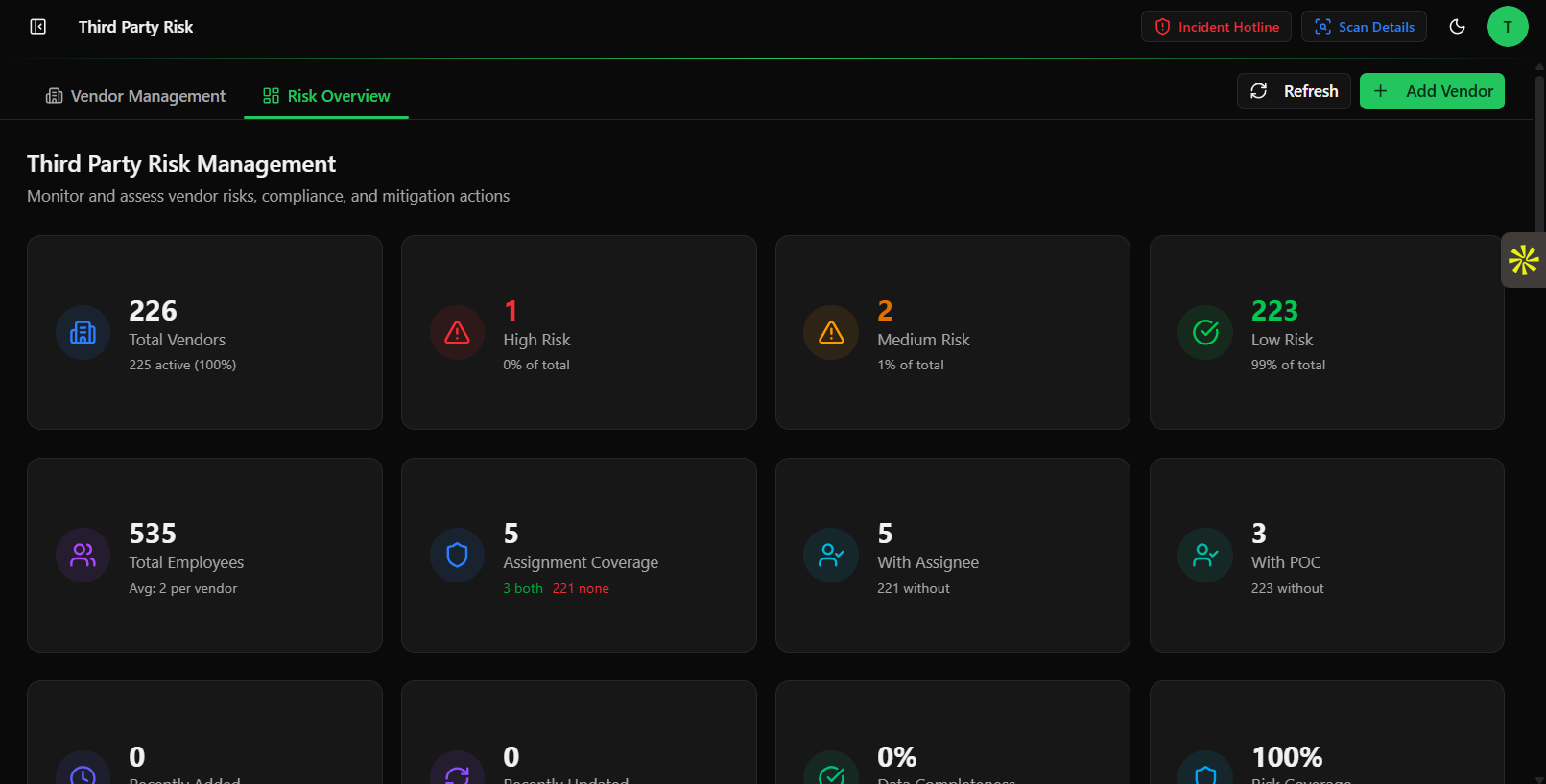
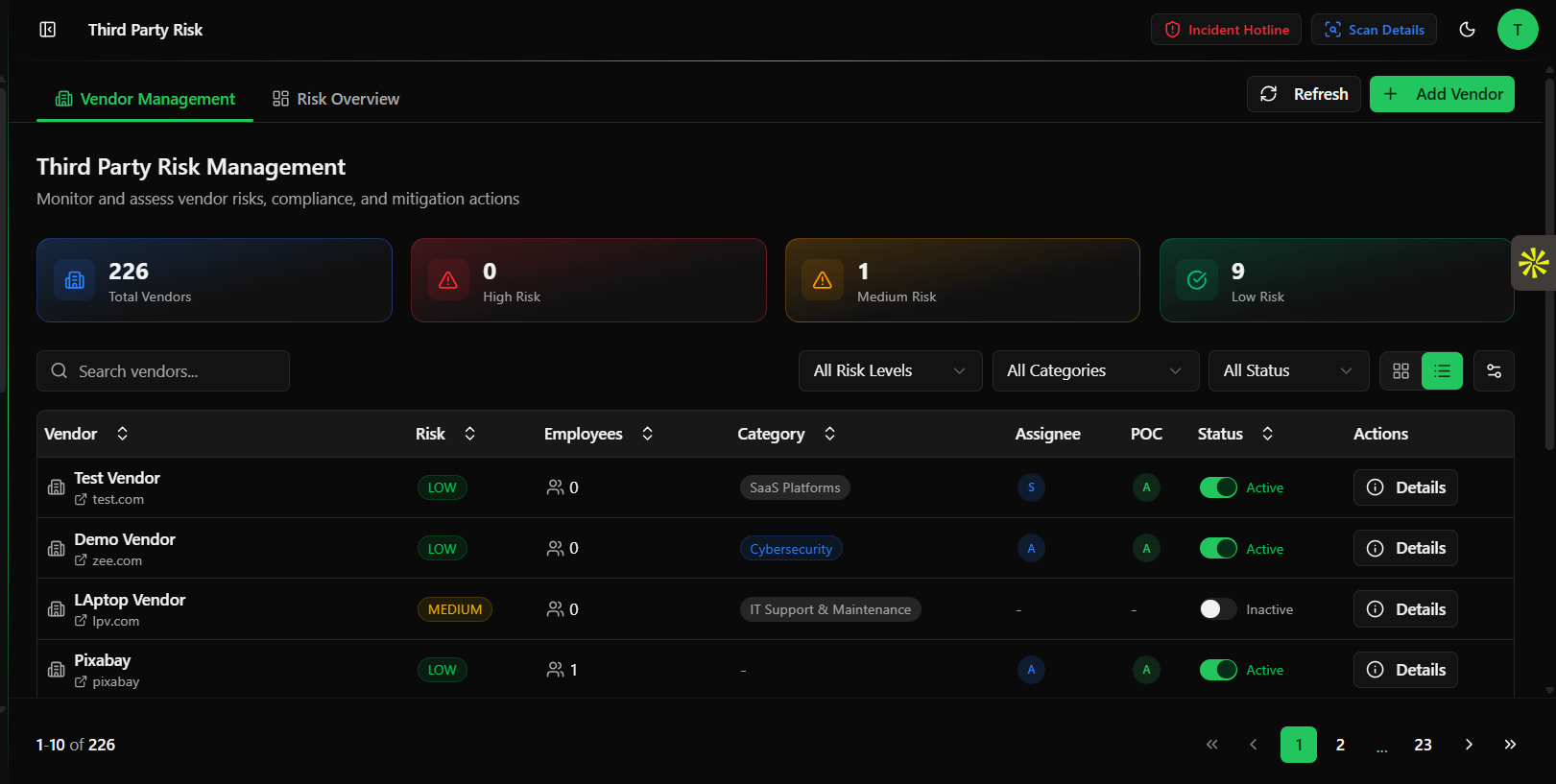
Mitigata’s Third-Party Risk Management system is characterised by its effectiveness and automation as the main features for managing and reducing risks associated with third-party vendors.

What you get with us:

  • Threat Detection: Alerts on risks associated with third-party applications, enabling issues to be addressed early.
  • Enhanced Compliance: Confirms vendors meet compliance requirements, reducing regulatory and security exposure.
  • Reduced Operational Risk: Continuous monitoring limits the impact of third-party vulnerabilities on business operations.
  • Stronger Vendor Trust: Supports secure, compliant relationships with third-party vendors.

Track Risk And Remediation

Manage vendor SLAs, tickets, and remediation workflows with clear status visibility and collaboration tools.

What Is Third Party Risk Management (TPRM)?

Third-party risk management involves a systematic approach to recognising and minimising risks posed by external vendors, suppliers, and service providers. TPRM includes various risk management such as:
  • Cybersecurity and third-party cyber risk management
  • Data privacy and regulatory exposure
  • Operational and supplier concentration risk
  • Financial stability and vendor risk rating
  • Fourth-party risk management linked to subcontractors

Key Features to Look for in Third-Party Risk Management

The selection of appropriate software for third-party risk management is based on feature depth, scalability, and integration capabilities.
third party risk management

Risk-Based Vendor Classification

The tools for TPRM must allow vendors to be classified by their risk, both inherent and residual. This leads to improved prioritisation of vendor third-party relationships.

Customisable Risk Assessment Questionnaires

The questionnaires for third-party risk assessment must be tailored according to the vendor’s type, industry, and regulatory scope. It is important to have support for variation in the supplier risk assessment process.

Discover the top identity and access management tools that help organisations control user access securely.

Automated Vendor Due Diligence

Software for vendor risk management should be able to gather evidence, monitor reviews, and keep vendor due diligence reports in one place.

Continuous Monitoring Capabilities

Tools for third-party monitoring observe shifts in security posture, signs of possible breaches, and non-compliance. The more closely vendors are monitored, the faster the response time.

Fourth-Party Visibility

The features of fourth-party risk management highlight subcontractor dependencies and the risk of supplier exposure beyond direct vendors.

Take Control of Vendor Risk.

Centralise vendor assessments, due diligence, and monitoring with fast deployment and easy platform integration.

Risk Scoring and Reporting

Vendor risk tools should produce clear vendor risk ratings, dashboards, and audit-ready reports for both management and regulators.

Workflow and Remediation Tracking

TPRM software includes ticketing, SLA tracking, and vendor communication workflows to eliminate risk gaps.

GRC and Platform Integrations

Many companies use GRC vendors or platforms for vendor risk management. Data flow between governance, risk, and compliance programs is improved with native integrations.

Find the best patch management software to reduce vulnerabilities and keep systems secure

How to Choose the Right Third-Party Risk Management Solution

Deciding on the right third-party risk management solution is easier when business risks, vendor size, and regulatory pressures are clearly defined.
Define Your Vendor Risk Scope

Begin with a list of vendor types, supplier dependencies, and data access levels.

Next, assess vendor risks and identify those with the highest risk, such as IT service providers, cloud service providers, payment processors, or outsourced operations.

Map the Full TPRM Process

Internally document how the management process of vendor risk is carried out from onboarding to exits. 

The documentation should comprise vendor risk assessment, vendor due diligence, third-party monitoring, remediation, and reassessment.

Prioritise Risk-Based Assessments

A TPRM solution should allow for risk-tiered workflows instead of a single vendor risk assessment questionnaire for all suppliers. 

High-risk vendors will undergo more rigorous supplier risk assessments, while low-risk vendors will undergo a light check-up.

This is a compliance model aligned with TPRM best practices and helps speed up review timelines.

Simplify
Third-Party Risk Management
With Mitigata

Replace spreadsheets with automated TPRM workflows, risk scoring, and audit-ready reports in one platform.

Evaluate Continuous Monitoring Capabilities

A third-party risk management solution must incorporate internal vendor monitoring, security posture tracking, and alerting as part of its features.

This will prevent delayed vendor incident responses and help continue supplier risk mitigation.

Check Fourth-Party Risk Visibility

Subcontractors are usually relied on by the vendors. Fourth-party risk management capabilities can identify hidden supplier risk and help reduce exposure from downstream dependencies.

This is particularly true for regulated industries and critical service providers.

Find the best patch management software to reduce vulnerabilities and keep systems secure.

Review Integration and Platform Fit

There are many GRC vendors that organisations already use, and many of them offer vendor risk management platforms.

The right TPRM software integrates smoothly with existing workflows, ticketing systems, and reporting tools, preventing data silos.

Assess Reporting and Audit Readiness

Vendor risk management tools should provide vendor risk ratings that are easy to understand.

The dashboards must be able to support leadership review and regulatory inspections without manual data compilation.

Consider Managed TPRM Support

Supplier risk assessment services and managed third-party risk management solutions are an excellent help for teams that have limited resources.

The expert-led reviews, vendor communication, and remediation tracking all require staff time, thereby improving response time.

Tailor Risk Assessment Easily with Mitigata.

Deploy customisable questionnaires and scoring workflows that adapt to vendor type, industry, and compliance needs.

Conclusion

Selecting the right TPRM solution means prioritising vendor risk visibility, unified audits, and continuous monitoring throughout the entire third-party relationship.

Contact Mitigata Toady! For an integrated third-party risk management solution with easy integration, adjustable pricing, and a free trial to help you start quickly.

deepthi s

Leave a Reply

Your email address will not be published. Required fields are marked *