

 areena g
Why PAM Matters Now
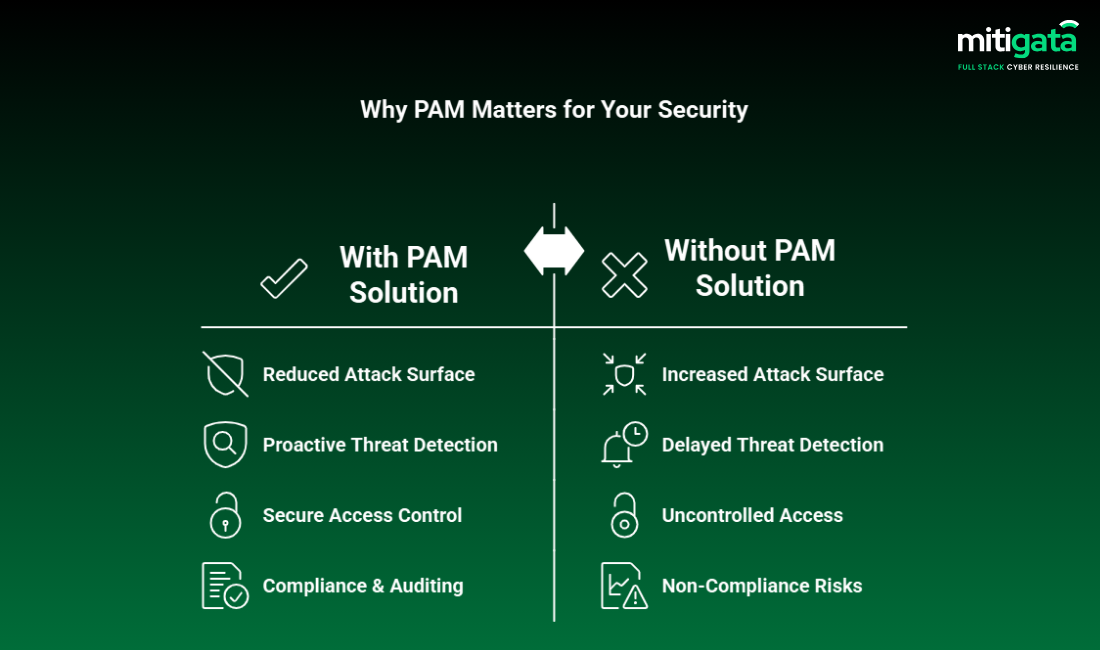
Privileged accounts, whether managed by humans or machines, pose a great risk, as they grant the power to create, change, or delete the infrastructure that’s most important.
The definition of privileged access management (PAM) according to Gartner is “a suite of tools that provides higher access control for both users and machines.
The combination of new working methods, remote admin access, and a large number of non-human identities has led to access sprawl and unmanaged credentials, which are some of the biggest attack vectors. The rapid growth of the global PAM market is a sign of the urgency of the matter.
Discover the most common cyber threats that could ruin your business in this digital age!
Top PAM Trends to Look For
The privileged access management landscape has been greatly shaped by these trends:
PAM Becomes an Enforcement Point for Zero Trust
Moving to a Zero Trust system means every request has to be verified. PAM is changing from a supporting role to that of a core enforcement layer that assigns rights dynamically according to the identity, context, and risk.
Companies are gradually increasing the role of PAM in the Zero Trust architectures to enforce the policies of the least privileged users and time-limited access.
Just-In-Time (JIT) & Ephemeral Privileges Become Standard
Only granting access when necessary and revoking it shortly afterwards will greatly reduce the risk. This is the main idea behind just-in-time privileged access management.
JIT (Just In Time) workflows for human, machine, and DevOps jobs are now a standard requirement in purchases.
Secrets Management & DevOps Integration Deepen
As infrastructure is increasingly relying on CI/CD, containers, and cloud platforms, the risk of API keys, tokens, and SSH credentials has become a primary privileged access management issue.
Modern PAM solutions not only include credential management as part of “just-in-time privileged access” workflows but also extend support to DevOps toolchains.
CIEM and Cloud Entitlement Governance Take Centre Stage
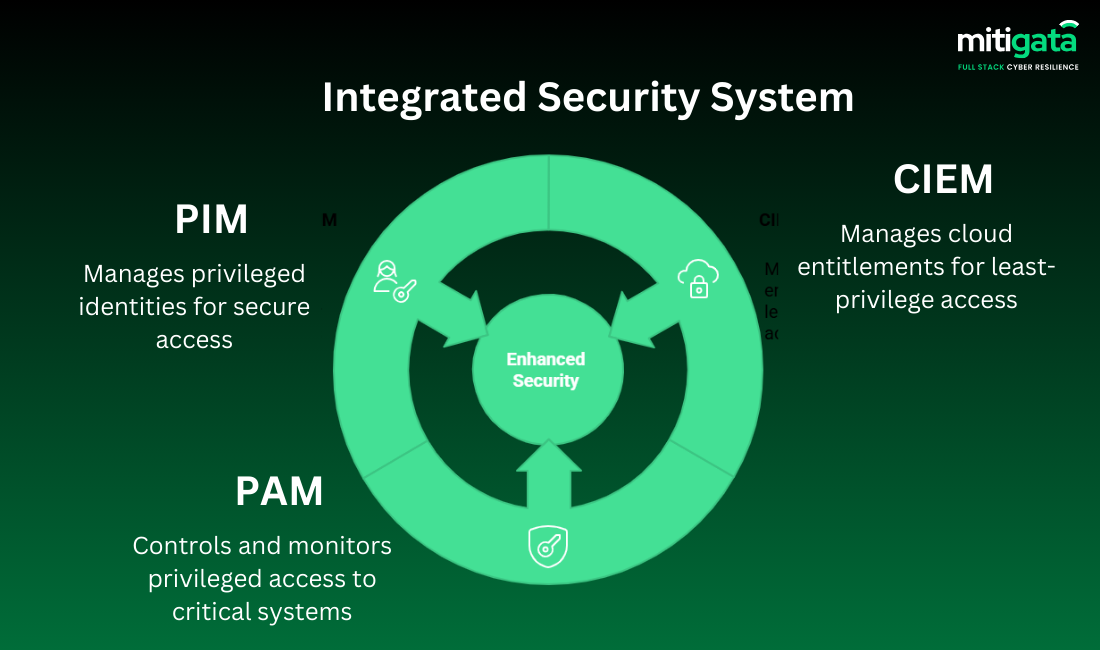
The Cloud Infrastructure Entitlement Management (CIEM) allows enterprises to monitor access to their cloud systems and detect permissions that are either unnecessary or present a risk.
The integration of CIEM tools with Privileged Access Management (PAM) and Privileged Identity Management (PIM) allows companies to grant access to high-level privileges only as needed.
AI/ML-Powered Analytics and Automation
More and more PAM tools are incorporating AI/ML for the purpose of establishing a baseline for privileged user and non-human identity behaviour, detecting anomalies, and automating policy changes.
The features provided by this technology not only improve the performance of timely access control but also significantly lower the workload created by human intervention.
Searching for resources to enhance your cybersecurity protections? Explore our Compilation of Leading MDR (managed detection and response) tools
Merging: Identity Platforms and PAM & PIM Come Together
The trend in the market is towards platforms that are unified and offer the combination of IAM, PIM, PAM, and CIEM all under one control plane.
For instance, businesses that are assessing “pam jit” should confirm the vendor’s capabilities regarding identity lifecycles, machine identities, and just-in-time delegated access for all identity types and environments.
The Rise of Passwordless and Machine Identity
In many cases, non-human identities (containers, APIs, micro-services) have exceeded human ones in numbers within an organisation.
The management and automation of their privileged access utilising certificate-based or ephemeral credentials instead of static passwords are increasingly seen as an essential part of the “just in time privileged access” approach.

 akshit k
 deepthi s