

 areena g
What Is Dark Web Identity Theft?
Dark web identity theft refers to the illegal use of private information for its sale or exploitation through online marketplaces.
Dark web identity theft is the term used to describe when personal data, such as user ID, passwords, bank info or identity papers, is revealed on illegal websites.
This illegal trade in dark web identities creates a cycle of fraud, account misuse, and financial loss.
The dark web identity theft case often begins with data breaches, phishing, or malware infections that result in the exfiltration of personal data, which is then sold on the dark web.
From data leaks to phishing, this article explains how to protect yourself from identity theft in everyday life.
Common Types of Identity Theft on the Dark Web
Several common forms of identity theft appear across dark web forums and marketplaces, such as:
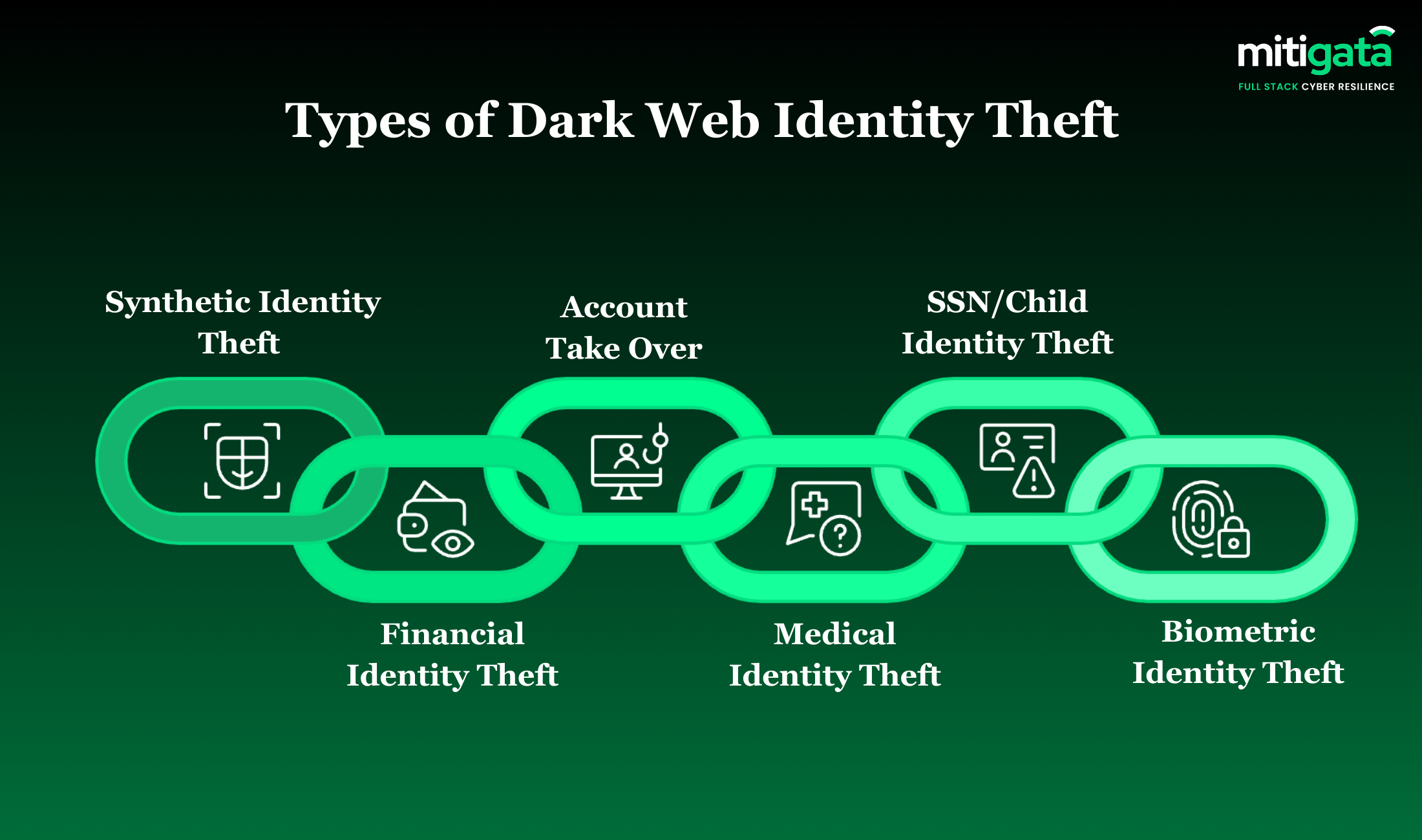
Synthetic Identity Theft
The hackers rely on fake identities and partial information, such as SSNs, dates of birth, or addresses, obtained from breach dumps and dark web listings of stolen identity data.
The attackers then use this data, combined with a fake name, to create new accounts, obtain loans, and commit financial fraud that remains undetected for many years.
Financial / Credit Card Identity Theft
This type of theft mainly deals with the direct financial abuse of the stolen payment information.
Financial identity theft occurs through dark web markets that sell card numbers, CVV data, expiration dates, and full billing profiles.
This information is used for unauthorised transactions, online purchases, and further sales within various fraud networks.
Stolen data on the dark web often includes bundled financial records.
Ever wondered how personal and company data ends up for sale? This guide explains the dark web data ecosystem.
Account Takeover
This approach aims to hijack existing user accounts using stolen login credentials.
Account takeover activity on the dark web is linked to credential theft from phishing campaigns, malware infections, and infostealer logs.
Reusing passwords across email, banking, cloud tools, and enterprise systems will result in data loss and service outages.
Medical Identity Theft
This type of theft leverages information from the healthcare and insurance sectors to commit fraud, with leaked data exposing patient records, policy numbers, and treatment data.
Criminals exploit this for filing false claims, accessing medical services, or reselling records. Often, victims realise the issue only after disputes over billing or coverage denials.
A practical guide to checking whether your email is on the dark web and what steps to take next.
SSN / Child Identity Theft
This type of theft affects the social security numbers of both adults and children.
SSN identity theft encompasses child identity theft, in which otherwise inactive SSNs are used to establish credit histories.
The dark web’s identity theft market subdivides into the selling of SSNs for employment fraud, tax scams, and loans.
Usually, the detection occurs several years after the fact, when the financial damage has already been done.
Biometric / Digital ID Theft
This category of theft targets identity data associated with physical or digital authentication.
Biometric and digital ID theft encompasses fingerprints, facial data, voiceprints, and government-issued digital identities.
Once in the thieves’ possession through data breaches or insecure storage, this information is traded on dark web forums under stolen identities.
Biometric data, unlike passwords, cannot be replaced, thereby increasing long-term risk.

 akshit k
 deepthi s