

 areena g
In 2025, India emerged as one of the world’s most targeted nations for cyberattacks, with organisations facing an unprecedented wave of digital threats. According to industry reports, Indian enterprises faced an average of over 2,000+ attacks per week, which is a 45% increase year-on-year compared to global averages.
From AI-powered ransomware encrypting hospital systems to sophisticated phishing schemes draining bank accounts, the cyber threat landscape evolved faster than most security teams could respond.
This blog highlights the key cyber attacks in 2025 while providing actionable insights for strengthening your defences in 2026.
Why Businesses Choose Mitigata For Cybersecurity
Before we dive into the data, here’s why over 800 companies across 25+ industries trust Mitigata to protect their digital assets:
Proactive Threat Detection – We identify risks before they become breaches
24/7 Monitoring – Real-time surveillance of your attack surface to ensure zero dwell time for attackers.
Expert Response Teams – Immediate action when threats emerge, minimising downtime and financial loss.
Compliance Support – Stay ahead of DPDPA and industry regulations with automated reporting tools.
Proven Track Record – Zero successful breaches across our protected clients in 2025
Executive Summary: India’s Cyber Crisis by the Numbers
Record-breaking cyber threats hit India hard in 2025, exposing urgent gaps in defences.
| Statistic | Value | Context |
|---|---|---|
| Total Cyber Attacks | 265.52 million | Across websites and endpoints nationwide |
| Malware Detections | 369.01 million | Monitored across 8.44 million endpoints |
| Attacks per Org/Week | 2,000+ | 47% higher than the global average of 1,925 |
| Financial Fraud Losses | ₹36,450 crore | Reported through the National Cyber Crime Portal by Feb 2025 |
Cybersecurity automation sounds foolproof until you see what it misses. Here are 6 cybersecurity automation tools and the blind spots that come with them.
What the Data Reveals About India’s Cyber Vulnerability
In 2025, India experienced more malware attacks than almost any other nation worldwide. Here’s why Indian businesses were disproportionately targeted:
- Rapid digital adoption without security maturity – Organisations rushed to cloud platforms and digital services, but left security as an afterthought. This created a “security debt” that attackers eagerly exploited.
- Endpoint explosion – With 8.44 million monitored endpoints, each device became a potential entry point for attackers. The rise of IoT devices in manufacturing and logistics specifically widened this gap.
- Legacy infrastructure – Outdated systems, unpatched software, and poor access controls created easy targets. Many SMEs were found running End-of-Life (EOL) operating systems, lacking critical security updates.
- Valuable data concentration – Banking, healthcare, and government sectors hold treasure troves of personal and financial information.
The average cost of a data breach in India reached an all-time high of ₹22 Crore in 2025, a 13% increase from the previous year (2024).

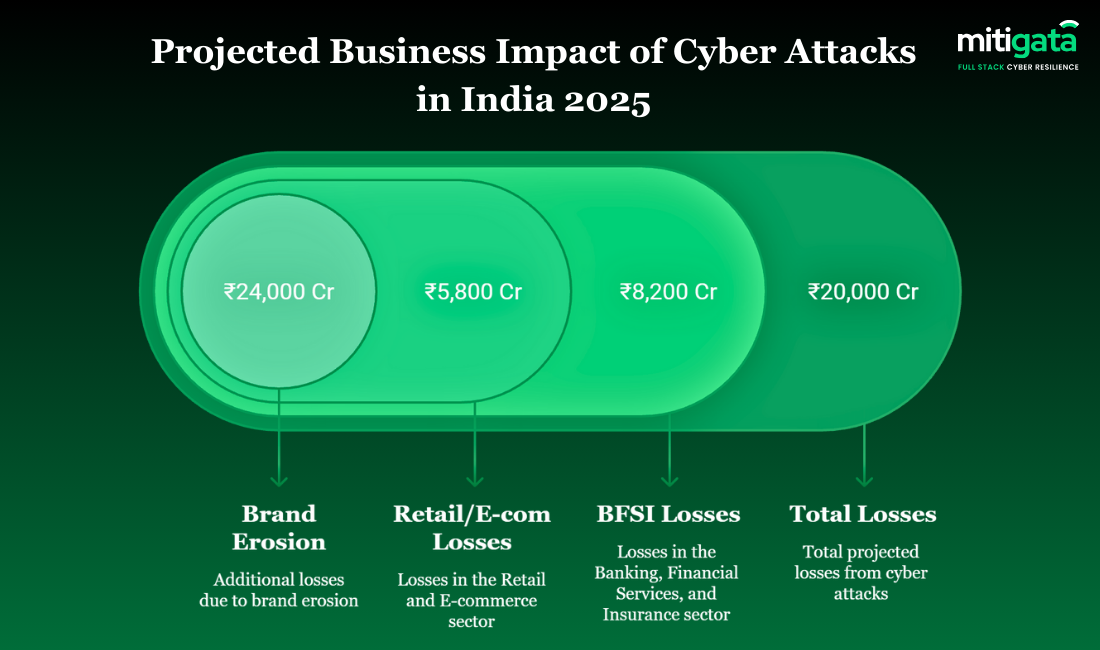
Business Impact of Cyber Attacks in India 2025
Attackers targeted vulnerable areas like payment systems, customer data, and unmonitored internal platforms.
The impact went beyond money; businesses faced:
- lost customers
- disrupted services
- reputational damage
- regulatory scrutiny
- lawsuits, and higher cybersecurity costs, which hurt growth.
Real-World Example: The SME Ransomware Crisis
A mid-sized logistics firm in Pune faced a lock-bit ransomware attack in mid-2025. Without cyber insurance or offline backups, they were forced to halt operations for two weeks, resulting in a ₹3.5 Crore loss and the cancellation of two major client contracts.
Regulatory Focus and National Cybersecurity Efforts
The Indian government introduced tougher rules requiring companies to report security breaches and follow stricter safety standards.
However, these new rules affected companies differently:
- On the one hand, organisations became more transparent and accountable for protecting data.
- On the other hand, many struggled to keep up, especially smaller companies that lacked strong security systems or couldn’t find enough trained cybersecurity professionals.
Key Compliance Mandates:
- Mandatory breach notification within statutory timelines (often 6 hours for CERT-In and 72 hours for the Data Protection Board).
- Regular security audits and vulnerability assessments
- Data protection impact assessments for high-risk processing
- Appointment of data protection officers
- Incident response and business continuity planning
- Enhanced access controls and encryption requirements
Looking for the best network security tools? This complete guide breaks down top solutions, use cases, and how to choose the right one.
Consequences of Non-Compliance:
Organisations that failed to meet requirements faced:
- Financial penalties – Hefty fines based on revenue or severity, reaching up to ₹250 Crore under the DPDPA.
- Operational restrictions – Temporary business suspensions
- Surprise audits – Disruptive regulatory inspections
- Public disclosure – Reputational damage from published violations
- Criminal liability – Personal accountability for executives

 deepthi s
 akshit k